
Tributylmethylammonium bis(trifluoromethylsulfonyl)imide
-
Molecular Formula: C13H30N.C2F6NO4S2
-
Molecular Weight: 480.532
-
CAS NO.: 405514-94-5
Description
Product Description
Tributylmethylammonium bis(trifluoromethylsulfonyl)imide (CAS 405514-94-5) is a hydrophobic ionic liquid composed of a tributylmethylammonium cation and a bis(trifluoromethylsulfonyl)imide anion. This compound is widely utilized as a high-performance electrolyte in lithium-ion batteries, supercapacitors, and electrochemical devices due to its exceptional thermal stability, low volatility, and high ionic conductivity. It also serves as a catalyst in organic synthesis and a solvent in specialized polymer processing.
Technical Specification
| Parameter | Specification |
|---|---|
| Purity | 98% |
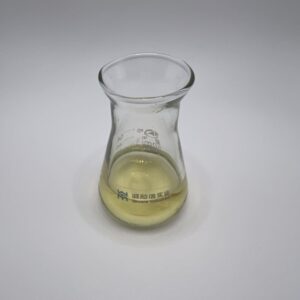
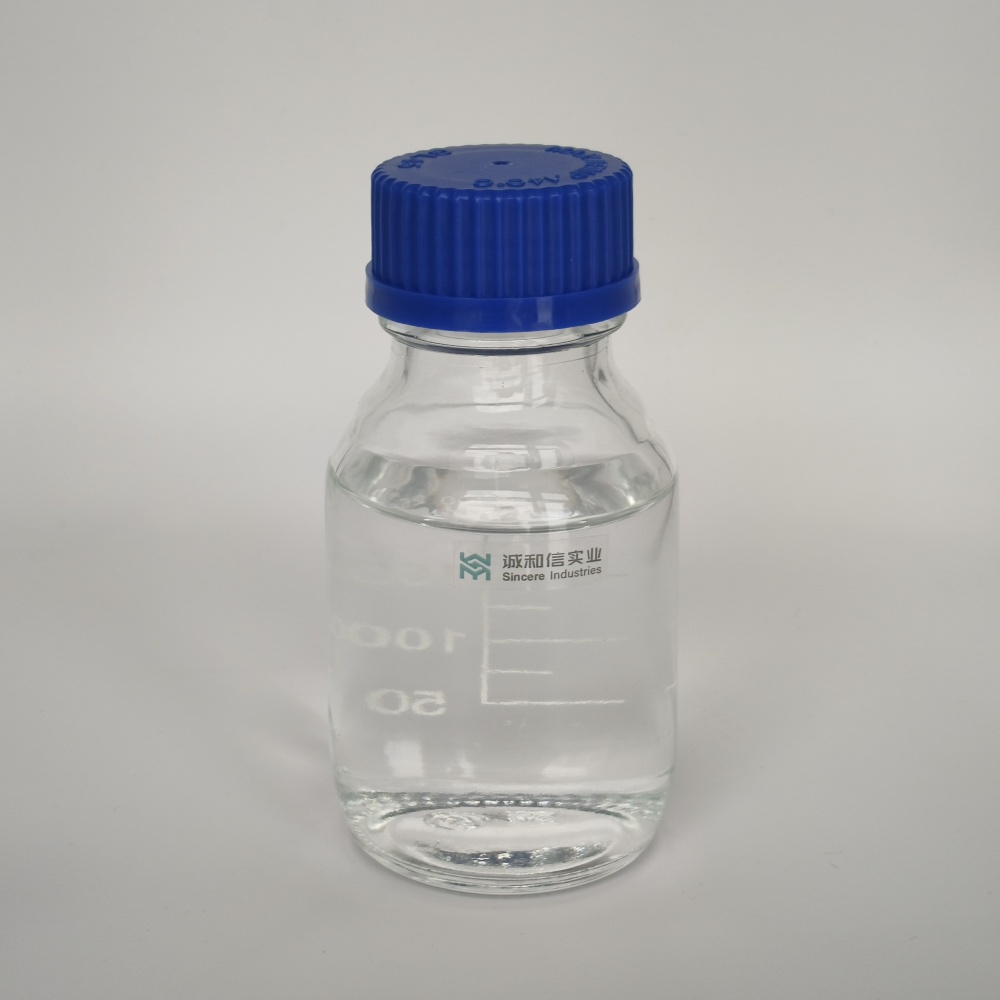
| Appearance | clear liquid |
| Melting Point | 27°C |
| Solubility | Miscible with polar aprotic solvents (e.g., acetonitrile, DCM); immiscible with water |
| Density | 1.27g/ml |
| Thermal Stability | Stable up to 300°C (decomposition initiates at higher temperatures) |
| Conductivity | 1–5 mS/cm (25°C, dependent on solvent system) |
Key Advantages
·High Ionic Conductivity: Enables efficient charge transfer in energy storage systems, particularly in high-voltage lithium-ion batteries.
·Low Volatility: Ideal for high-temperature applications, reducing evaporation risks in electrochemical devices.
·Wide Electrochemical Window: Supports stable operation in supercapacitors and advanced battery chemistries.
·Hydrophobicity: Minimizes moisture sensitivity, enhancing shelf life and process compatibility.
·Customizable Purity: Available in grades from 95% to 99.9% for research or industrial use.
Applications
·Energy Storage: Electrolyte additive for lithium-ion batteries and supercapacitors to improve cycle life and safety.
·Organic Synthesis: Catalyst in alkylation and polymerization reactions.
·Polymer Electrolytes: Solvent for ion-conductive membranes in fuel cells.
·Electroplating: Non-aqueous electrolyte for metal deposition processes.
Quality Assurance
·Batch-Specific COA: Includes NMR, FTIR, and mass spectrometry data to verify structure and purity.
·Regulatory Compliance: Meets REACH and TSCA requirements; RoHS-compliant grades available.
Safety & Handling
·Hazard Classification: Skin corrosion/irritation (Category 2, H315); may cause eye damage (H318).
·Protective Measures: Use nitrile gloves, goggles, and fume hoods during handling.
·Storage: Keep in sealed containers under inert gas (e.g., argon) at 15–25°C.
·Disposal: Incinerate as hazardous waste; avoid release into waterways.
![ETHYL 1-(2,4-DIFLUOROPHENYL)-7-CHORO-6-FLUORO-4-OXO-HYDROPYRIDINO[2,3-B] PYRIDINE-3-CARBOXYLATE](https://hnsincere.com/wp-content/uploads/2024/08/ETHYL-1-24-DIFLUOROPHENYL-7-CHORO-6-FLUORO-4-OXO-HYDROPYRIDINO23-B-PYRIDINE-3-CARBOXYLATE-300x300.jpg)