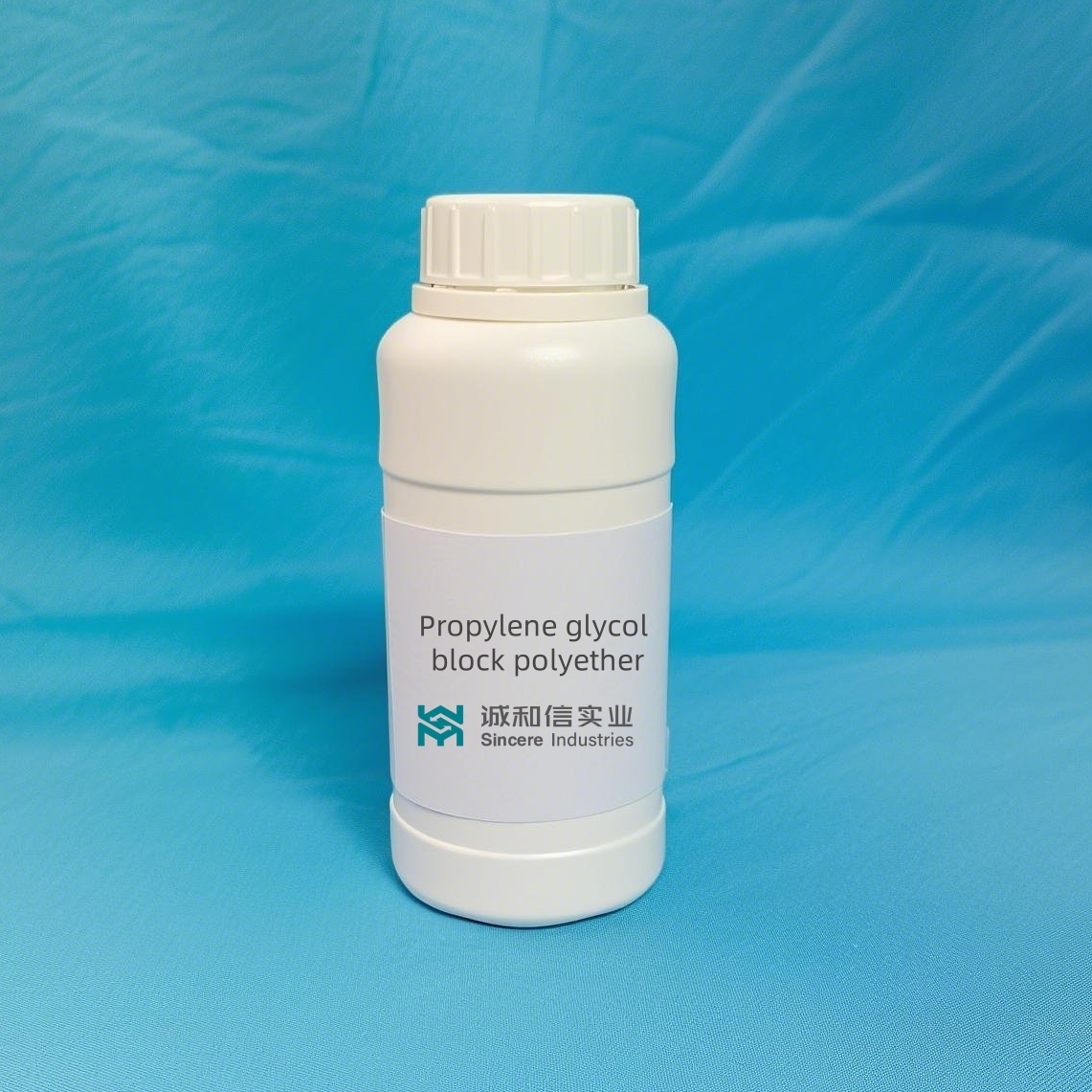
Propylene glycol block polyether
- Chemical Composition Polyoxyethylene, Polyoxypropylene Block Copolymer
- Type Non-ionic
Description
Technical Specifications
| Name | Appearance (25℃) | Average Molecular Weight | Viscosity (25℃ CPS) | Cloud Point (1% aqueous solution) | Melting Point (℃) | Moisture (%) | pH Value (1% aqueous solution) | HLB Value |
| L31 | Colorless transparent liquid | 1100 | 200 | 37 | — | ≤1.0 | 5.0~7.0 | 3.5 |
| L35 | Colorless transparent liquid | 1900 | 320 | 70~85 | — | ≤1.0 | 5.0~7.0 | 18.5 |
| F38 | White solid | 5000 | — | >100 | 45 | ≤1.0 | 5.0~7.0 | 30 |
| L42 | Colorless transparent liquid | 1630 | 250 | 37 | — | ≤1.0 | 5.0~7.0 | 8 |
| L43 | Colorless transparent liquid | 1850 | 310 | 42 | — | ≤1.0 | 5.0~7.0 | 10 |
| L44 | Colorless transparent liquid | 2200 | 440 | 45~55 | — | ≤1.0 | 5.0~7.0 | 12 |
| L45 | Colorless liquid to paste | 2400 | — | 75~85 | — | ≤1.0 | 5.0~7.0 | 15 |
| L61 | Colorless transparent liquid | 2000 | 285 | 17~21 | — | ≤1.0 | 5.0~7.0 | 3 |
| L62 | Colorless transparent liquid | 2500 | 400 | 21~26 | — | ≤1.0 | 5.0~7.0 | 7 |
| L63 | Colorless transparent liquid | 2650 | 475 | 34 | — | ≤1.0 | 5.0~7.0 | 11 |
| L64 | Colorless transparent liquid | 2900 | 550 | 57~61 | — | ≤1.0 | 5.0~7.0 | 13 |
| P65* | Milky white paste | 3500 | — | 75~85 | 29.5 | ≤1.0 | 5.0~7.0 | 15 |
| F68 | White flaky solid | 8350 | — | >100 | 50 | ≤1.0 | 5.0~7.0 | 29 |
*P65 was formerly known as L65.
Properties and Applications
Low-Foam Detergent or Defoamer:
- L61, L64, F68: Used to formulate low-foam, high-detergency synthetic detergents.
- L61: Used as a defoamer in the paper or fermentation industries.
- F68: Used as a defoamer in blood circulation during artificial heart-lung machine operations to prevent air entry.
Pharmaceutical Excipients and Emulsifiers:
Due to their low toxicity, polyethers are commonly used as excipients and emulsifiers in pharmaceuticals, including oral, nasal sprays, eye and ear drops, and shampoos.
Wetting Agents:
Effective wetting agents used in fabric dyeing, photographic development, and acidic baths for electroplating. F68 increases water permeability in sugar factories, leading to higher sugar yields.
Antistatic Agents:
L44: Provides lasting antistatic protection for synthetic fibers.
Dispersants in Emulsion Coatings:
- F68: Used as an emulsifier in the polymerization of vinyl acetate emulsions.
- L62, L64: Used as pesticide emulsifiers, coolants, and lubricants in metal cutting and grinding, and lubricants in rubber vulcanization.
Crude Oil Demulsifiers:
L64, F68: Effectively prevent scale formation in oil pipelines and are used in secondary oil recovery.
Paper Additives:
F68: Enhances the quality of coated paper.
Various Applications:
F38: Used as emulsifiers, wetting agents, defoamers, demulsifiers, dispersants, antistatic agents, dust control agents, viscosity modifiers, foam control agents, leveling agents, and gelling agents. Applicable in agricultural chemicals, cosmetics, pharmaceuticals, metalworking cleaning, pulp and paper industries, textile processing (weaving, finishing, dyeing, soft finishing), water treatment, and as bleaching assistants.
Wool Industry:
P65: Mainly used in the wool industry as a wool protector. Adding approximately 0.3% during wool carbonization reduces wool scale damage, increases single fiber strength by 10%, and reduces yarn breakage rate by 10%.
Packaging and Storage
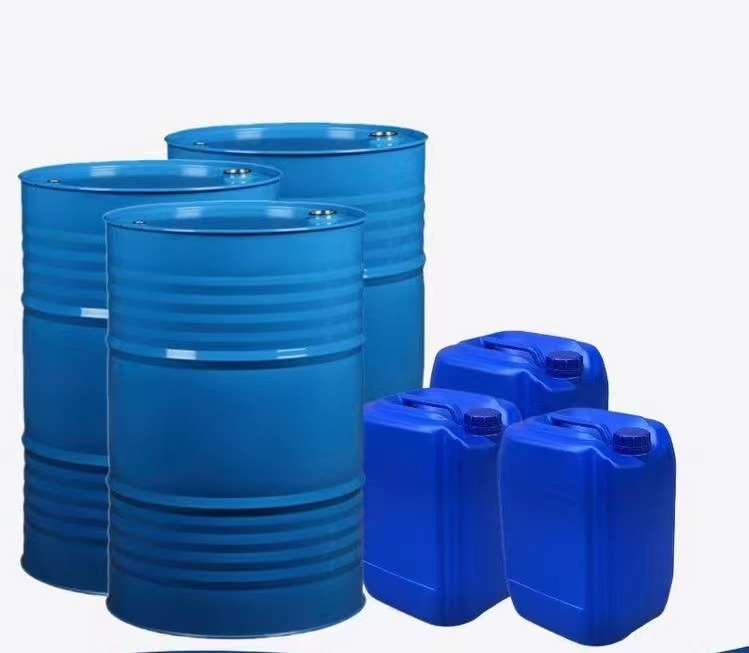
- Packaged in 200Kg iron drums or 50Kg plastic drums.
- Stored and transported as general chemicals.
- Stored in a dry, ventilated place.
- Shelf life of two years.