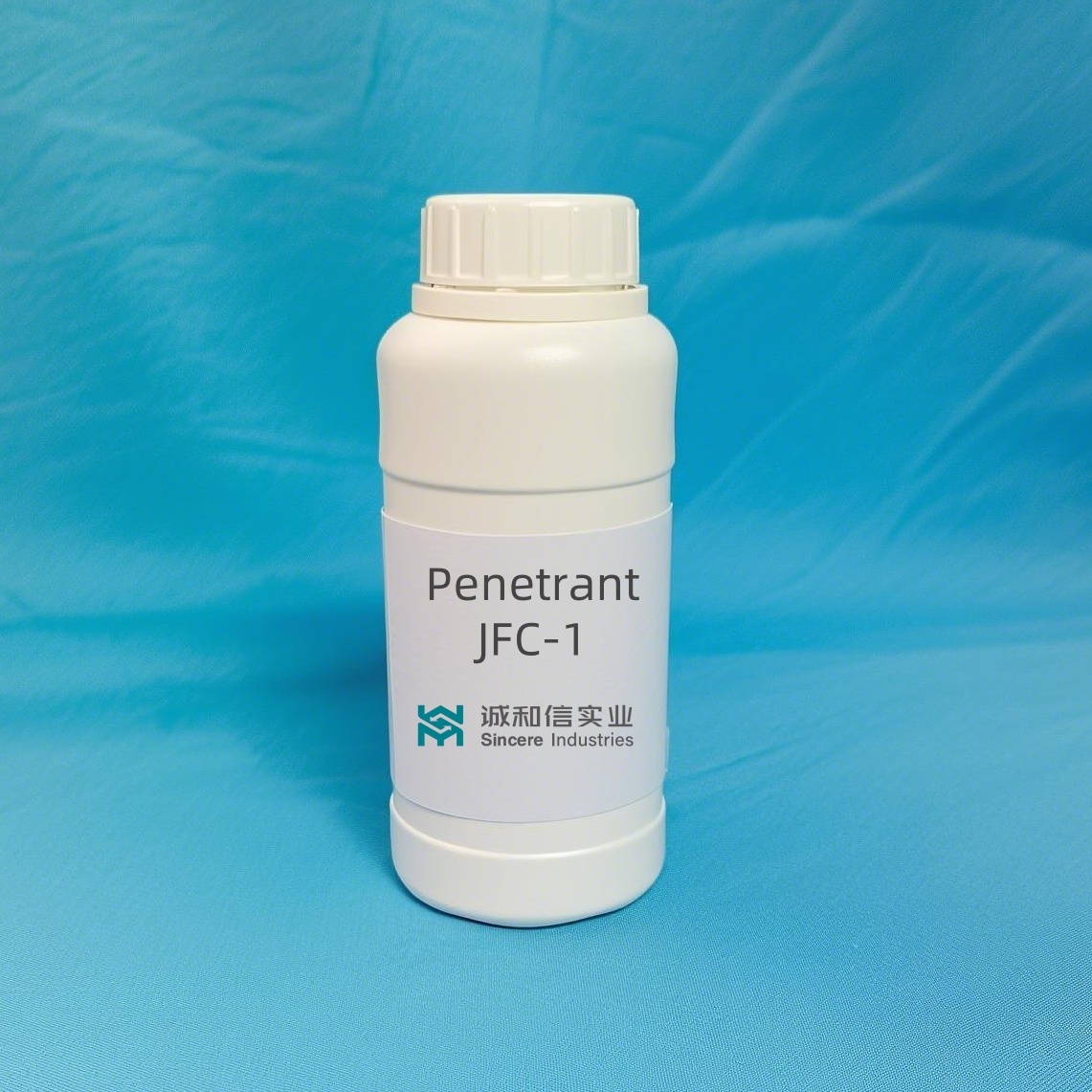
Penetrant JFC-1
- Chemical composition Condensate of fatty alcohol and ethylene oxide
- Type Non-ionic
- HLB value 11.5~12.5 (theoretical value)
Description
Technical indicators
- Appearance: slightly yellow to colorless viscous liquid (visual inspection at 25℃)
- pH value: 5.0~7.0 (1% aqueous solution)
- Cloud point: 40~50℃ (1% aqueous solution)
- Penetration: ≤60 seconds (0.1% aqueous solution), ≥100% of the standard product (JFC)
Performance and characteristics
- Easily soluble in water, with excellent penetration performance, it does not affect the penetration above the turbidity point.
- As a penetrant in the textile industry, it can be used in sizing, desizing, scouring, bleaching, carbonization and other processes. It can be used as a penetrant in dyeing baths and finishing baths.
- As a penetrant in the leather industry, it can also be used as a degreasing agent.
- It has a strong wool washing ability, is easy to wash off various oil stains and has a soft feel.
Application
- Penetration: In the textile, printing and dyeing, finishing and other processes, this auxiliary agent can be used for those that cannot use anionic penetrants. The dosage is generally 1~5g/L.
- Desizing: When desizing with biological enzymes (starch slurry), the use of JFC can accelerate desizing. The general dosage is about 0.1% of the liquid weight.
- Chemical fiber scouring: When scouring acetate fiber and other synthetic fiber products, adding JFC2~5g/L and sodium chloride 5g/L to the scouring liquid can improve the scouring effect.
- Wool washing: The penetrant JFC has the ability to wash wool. It will not remain on the wool after use. There is no yellowing or other defects. The fiber feels soft. The penetrant can be used in neutral, alkaline or acidic environments. It can be used with soap in hard water or alone. The temperature is preferably 40~50℃.
- Wool carbonization: 0.5~1g/L of penetrant JFC can be added to the wool carbonization to shorten the carbonization time, reduce the amount of acid and improve the carbonization effect.
Packaging and storage and transportation
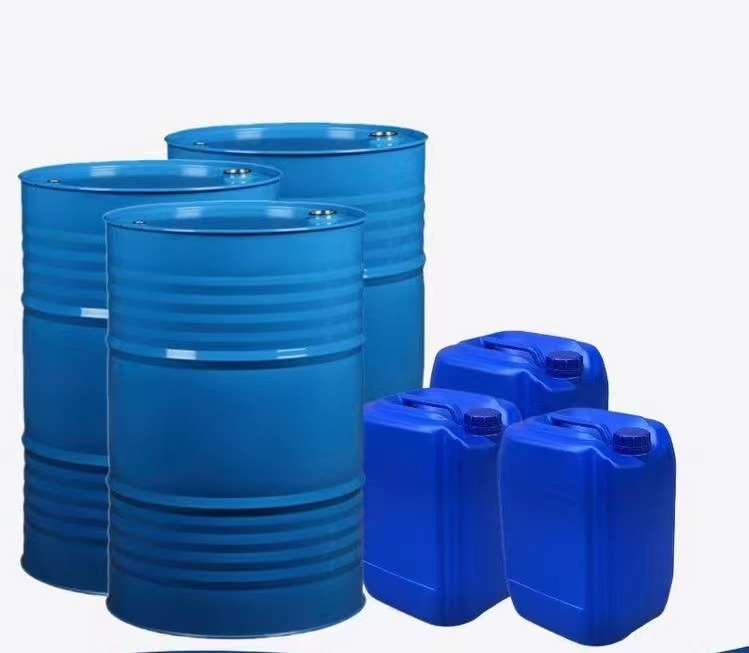
Packaged in 200Kg iron barrels and 50Kg plastic barrels. Store and transport as general chemicals. Store in a dry and ventilated place. Shelf life is two years.