
Chitosan
- Molecular Formula: C6H11NO4X2
- Molecular Weight: 161.16
- CAS Number: 9012-76-4
- Deacetylation: Min 85%
Description
Specification:
| Index | Standard |
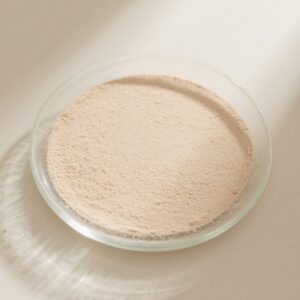
| Description | Off-white or light yellow powder |
| Deacetylation degree | 85.0 |
| Loss on drying | 10.0 |
| Residue on ignition | 1.0 |
| Acid insoluble | 1.0 |
| PH value | 6.5-8.5 |
| Viscosity, mpa.s | 20-1000 |
| Heavy metals (Pb),mg/kg≤ | 2.0 |
| Arsenic,mg/kg≤ | 1.0 |
| Finesse,mesh | 80 mesh screening rate ≥ 95% |
Properties:
Chitosan is a linear polysaccharide composed of randomly distributed β-( 1→4 )-linked D-glucosamine (deacetylated unit) and N-acetyl-D-glucosamine (acetylated unit). It is made by treating the chitin shells of shrimp and other crustaceans and cell walls of fungi (Mushroom, Agaricus Bisporus, Aspergillus Niger) with an alkaline substance, like sodium hydroxide.
Application:
Chitin and chitosan are natural biopolymers that have various properties such as antimicrobial activity, hemostatic agent, metal-chelating, molecular affinity, and wound-healing agent. For a wide range of uses of these polymers, different modifications have been studied by different researchers. Electrospun fibers of chitin and chitosan could therefore be of great interest in various application fields such as tissue engineering, biomedical, cosmetics, and many industrial applications, such as wastewater treatment.
Chitosan has various effects such as improving immunity, activation of cells, preventing cancer, lowering blood pressure, lowering blood pressure, anti-aging and regulating body environment. It can be used in medicine, health care and food fields.
Package and Storage:
25KG/bag. Sealed in dry, room Temperature