Isostearic Acid: Ingredient for Modern Cosmetic Formulations
Fundamental Chemical Properties of Isostearic Acid
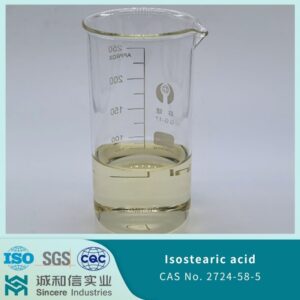
Isostearic acid (CAS 2724-58-5) is a branched-chain saturated fatty acid. It features a stable molecular structure and low freezing point. Unlike ordinary straight-chain stearic acid, its branched structure prevents crystallization at low temperatures. Therefore, it maintains a clear and smooth oil state under diverse storage conditions. Furthermore, this chemical exhibits low volatility and excellent oxidation stability. It is non-irritating to human skin, so it serves as a safe raw material for cosmetic manufacturing.
Core Functional Mechanisms in Cosmetic Products
Isostearic acid acts as a multi-functional additive in cosmetic formulations. Firstly, it works as an efficient emollient to soften the stratum corneum. It can simulate human skin lipids to strengthen the natural skin barrier. Secondly, it serves as an emulsifier to balance oil-water phases. Accordingly, it stabilizes the formula structure of lotions and creams. In addition, it improves the dispersion of color pigments. For this reason, it enhances the uniformity and smoothness of makeup products.
Wide Application Coverage in Personal Care Industry
This ingredient covers multiple downstream cosmetic categories. It is commonly added to skincare products such as creams, serums and body lotions. Meanwhile, it is widely used in lipsticks, foundations and cream blushes. Besides skincare and makeup, it applies to hair conditioners and cleansing oils. Typically, the recommended addition dosage ranges from 1% to 5%. In this way, manufacturers optimize product viscosity without causing greasy skin feelings.
Product Advantages and Formulation Optimization Value
Isostearic acid possesses obvious advantages over conventional fatty acids. To begin with, it provides non-sticky and refreshing skin feel after application. Moreover, it effectively inhibits oil crystallization to extend cosmetic shelf life. It also shows good compatibility with esters and plant oils. Thus, it can mix well with various cosmetic raw materials. Additionally, its hypoallergenic property reduces skin irritation risks. As a result, it fits sensitive-skin cosmetic formulas perfectly.
Industrial Trends and Future Development Potential
Driven by the booming personal care market, the demand for high-purity isostearic acid continues to rise. Currently, cosmetic manufacturers focus on high-purity and low-odor grade products. They also develop derivative esters such as isostearates for advanced skincare. In the future, with stricter cosmetic safety standards, mild and stable fatty acid materials will gain higher popularity. Ultimately, isostearic acid will remain an indispensable basic ingredient in the global cosmetic industry.