
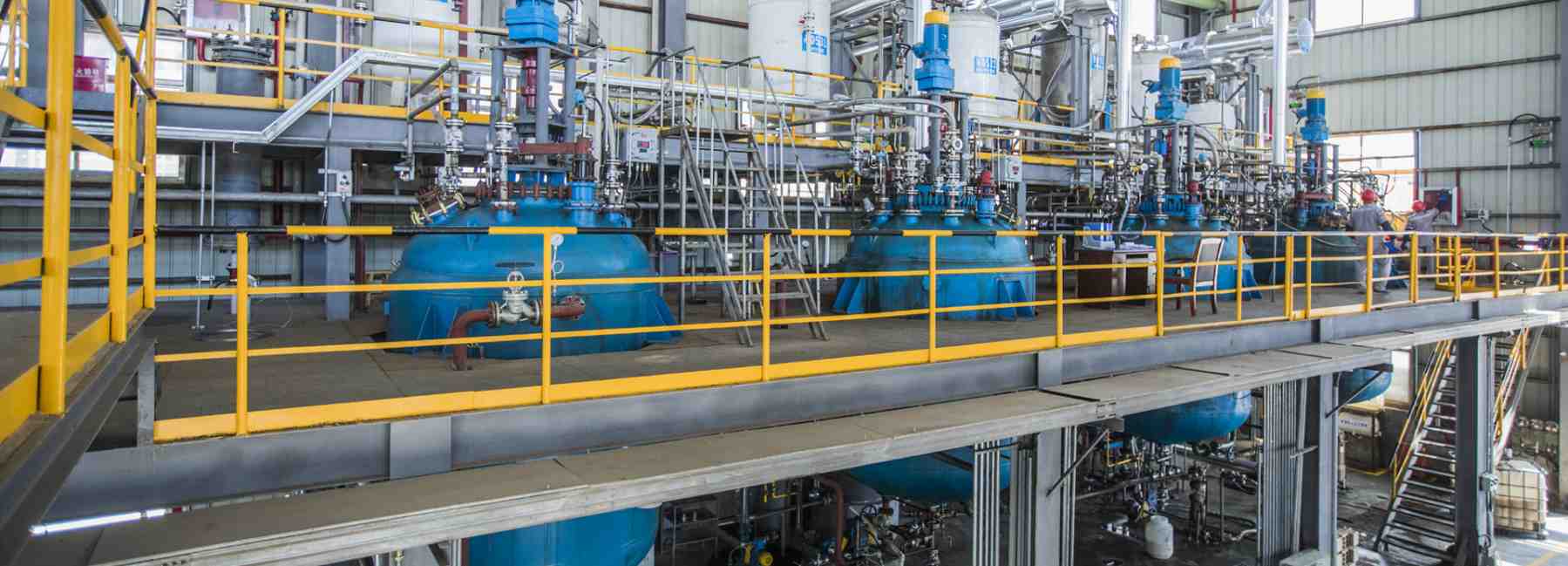
From TOFA to Imidazoline: the Raw Materials Behind Corrosion Inhibitors
In the oil and gas industry, corrosion is more than a maintenance issue. It can affect pipeline integrity, equipment service life, operational safety, and overall production efficiency. Among the various corrosion protection solutions, imidazoline-based corrosion inhibitors are widely used in oilfield chemical formulations.
But have you ever considered what goes into making these corrosion inhibitors? One important starting point is the selection of fatty acid raw materials.
What Is Imidazoline and Why Is It Used in Oilfields?
Imidazoline compounds are important intermediates in many oilfield corrosion inhibitor formulations. They are commonly used to protect metal surfaces in challenging environments, including systems exposed to produced water, brine, and acidic conditions. Their corrosion inhibition performance is associated with their ability to adsorb onto metal surfaces and form a protective film, helping reduce contact between the metal and corrosive media.
How Does TOFA Contribute to Imidazoline Production?
Tall Oil Fatty Acid (TOFA) is one of the fatty acid feedstocks used in the production of oilfield imidazoline intermediates. A common synthesis route involves the reaction of fatty acids with polyamines, such as diethylenetriamine (DETA), followed by dehydration and cyclization to form imidazoline structures.
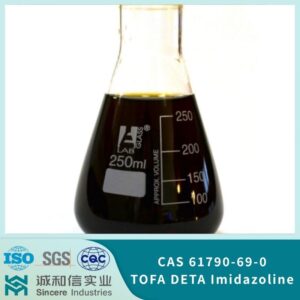
In this process, the fatty acid serves as the hydrophobic component of the molecule, while the nitrogen-containing group contributes to its adsorption characteristics.
The selection of fatty acid raw materials therefore plays an important role in determining the properties of the resulting imidazoline intermediate.
Why Does TOFA Quality Matter?
Not all fatty acid feedstocks are identical. When selecting TOFA for imidazoline production, manufacturers may need to consider several parameters.
Fatty Acid Composition: Influences the structure and properties of the resulting intermediate.
Iodine Value (IV): Indicates the degree of unsaturation in the fatty acid mixture.
Rosin Acid Content: An important compositional parameter when selecting distilled tall oil fatty acid.
Acid Value: Helps evaluate the fatty acid content and consistency.
Batch-to-Batch Consistency: Supports more predictable production and formulation performance.
The appropriate specifications depend on the synthesis process and the final application requirements.
From Raw Material Selection to Reliable Production
For manufacturers of oilfield corrosion inhibitors, choosing the right fatty acid is not simply about purchasing a chemical raw material. It is about finding a material that fits the production process, meets technical requirements, and can be supplied consistently. A well-selected TOFA grade can help manufacturers maintain better control over their raw material inputs and support consistent downstream production.
At Sincere Industries, we believe reliable chemical supply starts with understanding how our products are used. We focus on connecting raw material specifications with real industrial applications, helping customers make informed sourcing decisions. If you manufacture imidazoline-based corrosion inhibitors or other oilfield chemicals, we welcome discussions about your TOFA requirements.
From raw material selection to stable supply, every detail matters.