
EU PPWR 2026: What Chemical Exporters Must Know About the New Packaging Regulation
On 12 August 2026, the EU Packaging and Packaging Waste Regulation (PPWR, Regulation (EU) 2025/40) became fully applicable across all 27 EU member states. It entered into force on 11 February 2025 and is now being enforced after an 18-month transition period.
For chemical exporters selling into the EU — whether you ship steel drums, IBCs, FIBC bags or bulk ISO tanks — this new EU packaging regulation changes the rules of the game. It affects exporters outside the EU too, because the obligation follows the packaging, not the company.
In this guide, we explain what PPWR means for chemical suppliers, how we prepared as a company with 25 years of chemical export experience, and what you should do now.

What Is PPWR? From Directive to Regulation
For thirty years, EU packaging rules were set by a directive (Directive 94/62/EC), which each member state had to transpose into national law. The result: different rules, different enforcement, different deadlines across Europe.
PPWR replaces this fragmented system with a regulation — a single law that applies directly and uniformly in all 27 member states. No national transposition needed. One set of rules, one enforcement standard.
A crucial point for B2B suppliers: PPWR covers all packaging placed on the EU market — not just consumer packaging. Industrial packaging, including steel drums and plastic pallet wrap, is fully within scope.
Five Key Requirements of the New EU Packaging Regulation
- Recyclability and recycled content. All packaging must meet “design for recycling” criteria by 2030 and be recycled at scale by 2035. Plastic packaging must contain minimum recycled content from 2030 (for example, 30% for PET beverage bottles).
- Restrictions on single-use packaging. From 1 January 2030, certain single-use packaging is banned: hotel mini toiletries, single-use tableware for food and drink served on site, packaging for fresh fruit and vegetables under 1.5 kg, and more.
- Deposit return systems. By 2029, EU member states must achieve 90% separate collection of single-use plastic beverage bottles and metal beverage containers up to 3 litres.
- Reuse targets. Transport packaging must reach 40% reusable by 2030; beverage and e-commerce packaging have their own phased targets through 2040.
- Labeling, CE marking and EPR. Packaging placed on the EU market must carry a material-composition label from 12 August 2028 and a reuse symbol from 12 August 2029. Packaging undergoes conformity assessment with CE marking, and producers must register under extended producer responsibility (EPR) schemes with fees modulated by recyclability.
How PPWR Affects Chemical Exporters
Industrial packaging is in scope. A 180 kg steel drum of chemical is “packaging” in the eyes of the regulation. The good news for chemical suppliers: metal packaging is infinitely recyclable, which puts it in the most favourable recyclability class under PPWR.
Obligations follow the market, not the manufacturer. If your EU customer imports the goods, that importer generally carries the EPR registration and reporting obligations. If you sell directly to EU end users by distance selling, you must appoint an authorised representative in the EU.
Documentation is the real work. Under PPWR, packaging must be supported by a technical file and a declaration of conformity: material composition, recycled content, recyclability data. EU importers will ask their suppliers for this data — and they will ask early.
Dangerous goods packaging is a separate track. UN-certified drums and ADR transport rules govern safety. PPWR runs in parallel. Where requirements could conflict, specific exemptions and transitional provisions may apply — verify each point with a qualified advisor.
Our Approach: Three Steps to PPWR Compliance
Step 1: Assess What Actually Applies to Your Shipments
We mapped our product lines and found two very different situations:
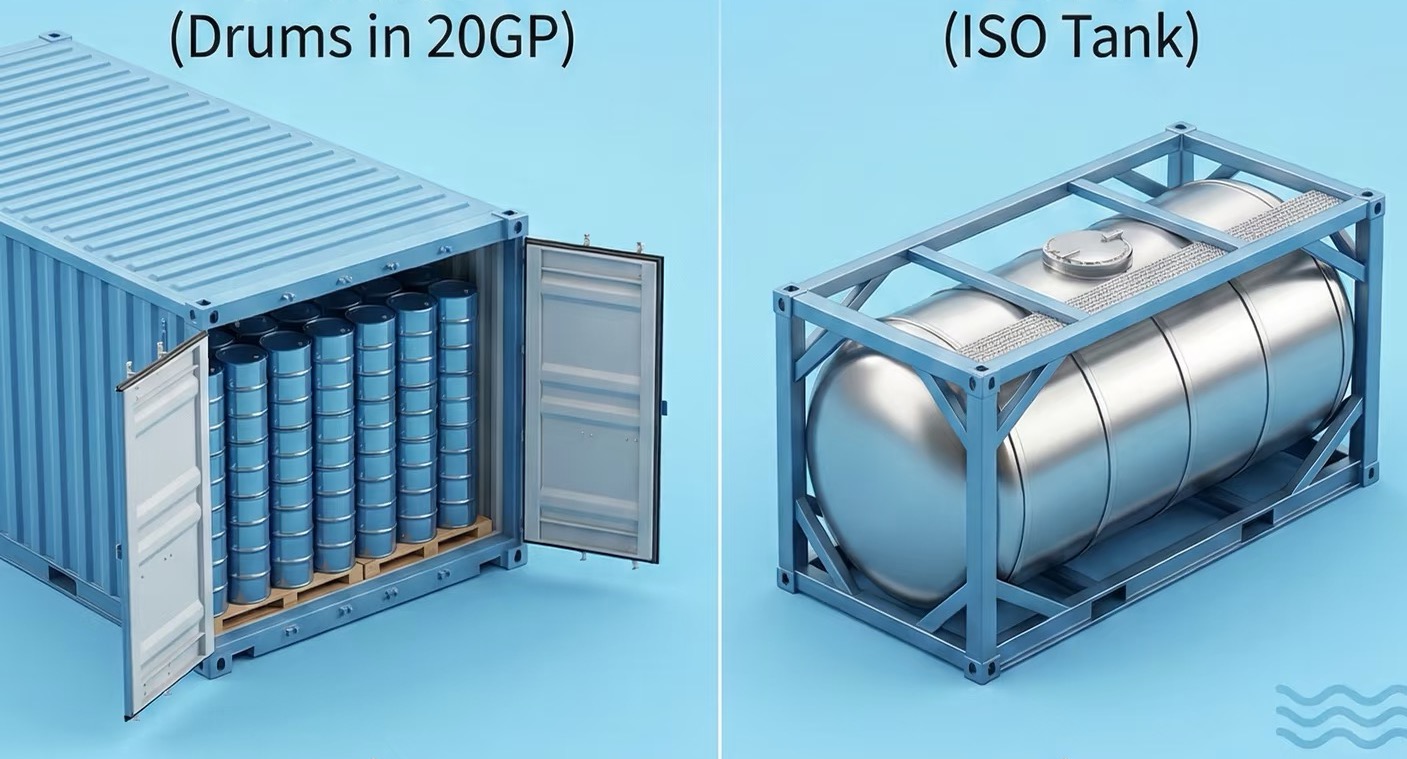
- Steel drum shipments (180 kg drums): These are industrial packaging and clearly within PPWR scope. Our core obligation is documentation and cooperation — providing material data and compliance statements to the EU importer.
- ISO tank container shipments: Under the EU’s long-standing interpretation, ISO tank containers are transport equipment, not packaging. They are regulated under the CSC Container Convention and ADR, not PPWR. Tank cleaning before loading is an operational step and has no packaging-compliance dimension.
Getting this distinction right saves time and avoids both over-compliance and under-compliance.
Step 2: Build Your Packaging Data Foundation
Data is the foundation of PPWR compliance. We did four things:
- Collected data from packaging suppliers — for steel drums, stretch film, strapping and labels: material composition, recycled content and recyclability statements.
- Built a packaging data archive — one file per supplier, with specifications and declarations ready to send to customers in minutes.
- Wrote compliance into purchasing terms — supply agreements now require a packaging material declaration with every order.
- Tracked the timeline — material labeling from August 2028, recycled content requirements from 2030, and the implementing rules still to come.
Step 3: Turn Compliance into a Competitive Advantage
| Date | Requirement |
|---|---|
| 12 August 2026 | Regulation fully applicable across the EU |
| 12 August 2028 | Material composition labeling on packaging |
| 12 August 2029 | Reuse symbol on reusable packaging |
| 2029 | 90% separate collection of beverage containers (≤3 L) |
| 1 January 2030 | Single-use packaging restrictions; max 50% empty space; recycled content; design-for-recycling criteria |
| 2030 / 2040 | Reuse targets for transport, beverage, grouped and e-commerce packaging |

Key PPWR Deadlines at a Glance
发货最快下周一,

FAQ: PPWR for Chemical Exporters
1. Does PPWR apply to industrial packaging such as steel drums?
Yes. PPWR covers all packaging placed on the EU market, including industrial packaging. Steel drums are recyclable metal packaging, which places them in the most favourable recyclability category.
2. Is an ISO tank container considered packaging under PPWR?
No. Under the EU’s consistent interpretation, ISO tank containers are transport equipment, not packaging. They fall under container safety and dangerous goods transport rules instead.
3. Who is responsible for EPR registration — the exporter or the EU importer?
In B2B imports, the EU-based importer generally holds EPR registration obligations. Non-EU suppliers selling directly to EU end users by distance contract must appoint an authorised representative in the EU.
4. What packaging labeling is required from August 2028?
Packaging placed on the EU market must carry a label identifying the packaging material composition, followed by a reuse symbol for reusable packaging from August 2029.
5. Are UN-certified dangerous goods drums exempt from PPWR?
UN certification addresses transport safety under ADR. PPWR applies separately to packaging placed on the market, with specific exemptions and transitional provisions where requirements could conflict. Verify your exact case with a qualified advisor.
6. Does PPWR affect exporters selling outside the EU?
Not directly — but multinational buyers increasingly cascade EU requirements into global procurement. Preparing PPWR-compliant documentation now positions you for both EU and non-EU buyers.
Final Thoughts
PPWR sends a clear message: packaging is no longer a last-mile cost — it is a first-mile compliance requirement. For chemical exporters, the winners will be those who start with data: know your packaging materials, keep supplier declarations on file, and hand EU customers a complete compliance pack before they ask.
This article is for general information only and does not constitute legal advice. Verify specific obligations with qualified professionals.