Why Is TOFA Used in Imidazoline-Based Corrosion Inhibitors?
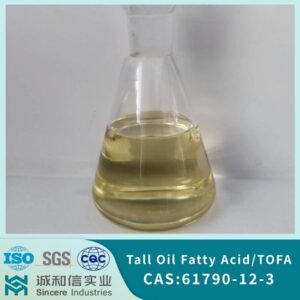
When developing imidazoline-based corrosion inhibitors for oilfield applications, much of the attention goes to the amine selection, reaction conditions, and final inhibitor performance. But there is another factor that deserves equal attention: the fatty acid feedstock. Tall Oil Fatty Acid (TOFA) is one of the fatty acid raw materials used in the production of imidazoline intermediates. Its value goes beyond simply providing a fatty acid component for the reaction.
For chemical manufacturers, several aspects are worth considering:
Fatty Acid Composition Matters
TOFA is a mixture of fatty acids, typically containing oleic acid and linoleic acid as major components, although the actual composition varies by grade and source.
Unlike a single fatty acid with a relatively defined molecular structure, TOFA has a composition profile that needs to be considered when designing and controlling an imidazoline synthesis process.
This makes the selection of the appropriate TOFA grade an important part of raw material qualification.
Iodine Value Is More Than Just a Specification
Iodine value reflects the degree of unsaturation in the fatty acid mixture.
For manufacturers working with fatty acid-derived intermediates, it provides useful information about the raw material composition.
However, a higher iodine value does not automatically mean better corrosion inhibition performance. Its significance should be evaluated alongside fatty acid composition, reaction conditions, and the intended application.
Rosin Acid Content Deserves Attention
As a characteristic component associated with tall oil fatty acid, rosin acid content is another parameter worth monitoring.
For manufacturers seeking tighter control over their feedstock composition, selecting a TOFA grade with a defined rosin acid specification can help make raw material qualification more consistent.
Batch-to-Batch Consistency Supports Process Control
A raw material may meet the required specifications in one shipment, but maintaining consistency across subsequent batches is equally important.
Variations in fatty acid composition and key specifications may need to be evaluated during production trials, particularly when manufacturers are optimizing an established synthesis process.
This is why raw material evaluation should go beyond checking a single COA.
For imidazoline manufacturers, choosing TOFA is not simply about purchasing a fatty acid. It is about selecting a feedstock that fits the intended chemistry and can be consistently supplied.
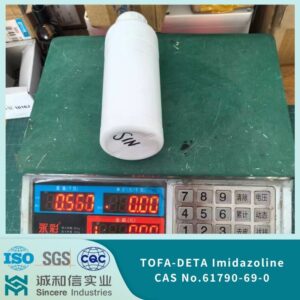
At Sincere Industries, we supply different TOFA grades, including high-iodine-value and low-rosin-acid options, as well as TOFA-based Imidazoline for oilfield chemical manufacturers.
We also work with our manufacturing partners to discuss application-specific specifications and potential customization requirements.
Are you currently using TOFA in your imidazoline production?
We would be glad to exchange technical insights and discuss your raw material requirements.