Chitosan: For More Sustainable and Multifunctional Textiles
In the textile industry, there is growing demand for sustainable, multifunctional fabrics that go beyond aesthetics. Recent research has combined natural anthocyanin dyeing with lavender oil microencapsulation, creating cotton fabrics that are both environmentally friendly and functionally enhanced.
Why natural dyeing?
Conventional synthetic dyes, while vibrant, often involve toxic chemicals that are harmful to both human health and the environment. Anthocyanins, natural pigments found in plants such as blueberries and red cabbage, offer a safer alternative. They exhibit unique pH-dependent color variations—ranging from red in acidic conditions to blue in alkaline environments. However, anthocyanins are prone to fading, limiting their application.
The role of chitosan and CMC
To address this challenge, researchers employed two natural biopolymers:
- Chitosan, derived from crustacean shells, a cationic polymer with antimicrobial and film-forming properties.
- Carboxymethyl Cellulose (CMC), a water-soluble, anionic cellulose derivative widely used as a stabilizer and thickener.
Through polyelectrolyte complexation, the positive charges of chitosan and negative charges of CMC form stable interactions that significantly enhance anthocyanin fixation on cotton fibers, improving color fastness under light and pH variations.
Adding fragrance through microencapsulation
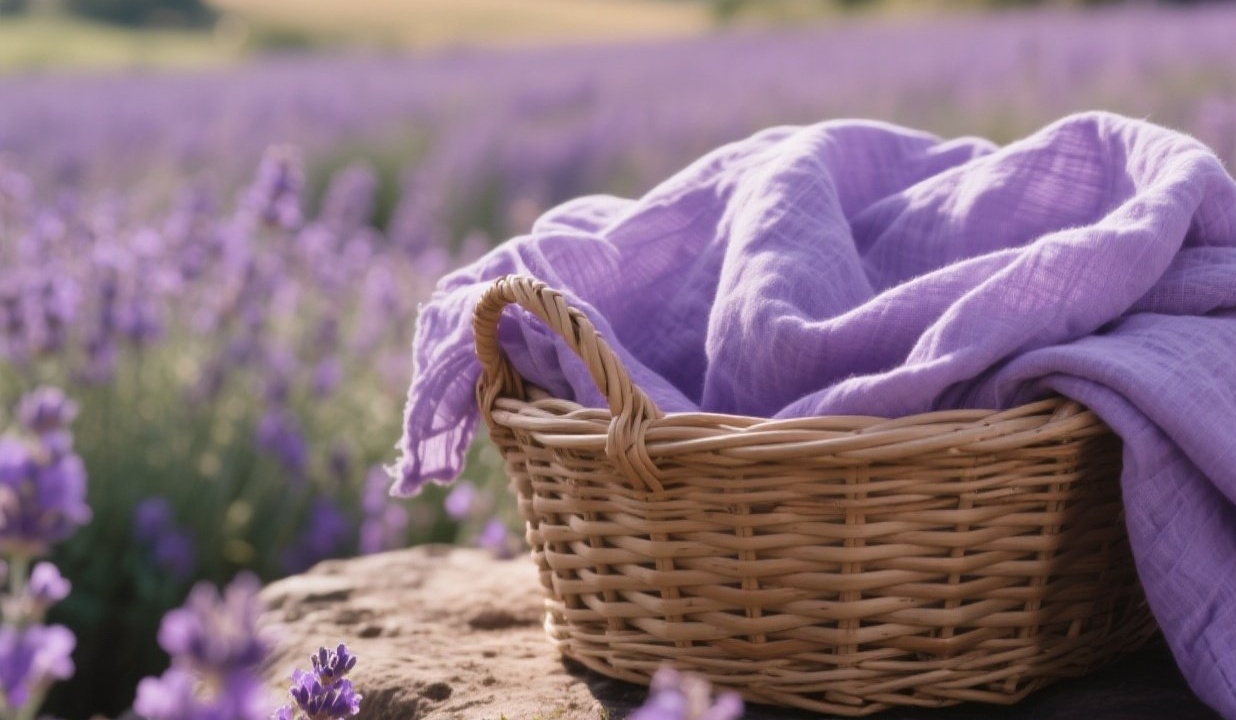
Beyond color stability, the fabrics were further functionalized with lavender essential oil, known for its soothing and aromatherapeutic effects. Since essential oils evaporate easily, researchers applied microencapsulation techniques using chitosan and CMC as the capsule wall materials. This allowed lavender oil to be encapsulated and released gradually, prolonging its aromatic effect and expanding the functional potential of the textile.
Validating the dual functionality
The dual system was evaluated using optical microscopy, FTIR, and SEM analyses to confirm molecular interactions and microcapsule formation.
- Anthocyanin-dyed fabrics maintained stable coloration under light exposure and pH changes.
- Lavender oil demonstrated a controlled, sustained release behavior, modeled using the Korsmeyer-Peppas kinetic model.
Significance and applications
This study demonstrates a new path for sustainable smart textiles by integrating color stability and controlled fragrance release into a single cotton fabric. The use of biodegradable biopolymers avoids conventional chemical auxiliaries, aligning with the principles of green chemistry and circular design.
Potential applications include:
- Healthcare textiles, offering both comfort and therapeutic benefits.
- Sportswear and home textiles, where long-lasting freshness and antibacterial properties are valued.
- High-end apparel, meeting consumer demand for eco-friendly and functional products.
By combining natural anthocyanin dyeing with lavender oil microencapsulation, researchers have developed a textile system that is sustainable, multifunctional, and adaptable to diverse applications. This innovation highlights how interdisciplinary approaches in materials science, textile engineering, and chemistry can redefine the future of high-performance fabrics.