Tall Oil Fatty Acid as Ink Resin Modifier and Drier
Introduction
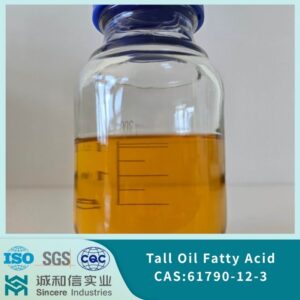
Tall Oil Fatty Acid (TOFA), a renewable byproduct of wood pulping, is widely regarded as a high-value functional additive for printing inks. Unlike petroleum-based fatty acids, TOFA contains a balanced mix of long-chain fatty acids and rosin acids, making it highly compatible with conventional ink resins such as alkyd, rosin ester, and phenolic resins. It serves dual critical roles in ink systems: acting as an efficient resin modifier to optimize processing and film properties, and functioning as a synergistic drier to accelerate curing, addressing common pain points in both solvent-based and eco-friendly water-based ink manufacturing.
TOFA as a Resin Modifier
As a resin modifier, TOFA significantly improves the compatibility between polar resin matrices and non-polar ink pigments, ensuring uniform dispersion and preventing flocculation. The long aliphatic chains in TOFA plasticize the ink resin film, effectively reducing brittleness and enhancing flexibility, which prevents ink cracking, chipping, or peeling on flexible substrates like paper, plastic films, and packaging materials. Additionally, TOFA lowers the melt viscosity of ink resins during processing, improving flowability and leveling properties, resulting in smoother ink coverage and sharper print resolution without compromising color intensity.
Catalytic Drying Performance
TOFA excels as a synergistic drier for oxidatively curing inks, primarily by boosting the activity of metal salt driers (such as cobalt, manganese, and zirconium driers) and accelerating the oxidation and crosslinking of unsaturated resin bonds. The unsaturated double bonds in TOFA molecules participate in the auto-oxidation reaction, forming free radicals that initiate rapid resin crosslinking, shortening surface dry time and hard dry time significantly. This catalytic effect reduces the dosage of expensive metal driers, lowers production costs, and avoids film defects like tackiness or wrinkling caused by excessive drier addition.
Improved Ink Film Durability and Practical Performance
Beyond modification and drying functions, TOFA upgrades the overall durability of cured ink films. It enhances the adhesion strength between the ink and substrate, boosting resistance to friction, water, alcohol, and common chemicals, which is vital for high-wear packaging and publication inks. The rosin acid fraction in TOFA also improves the gloss and hardness of the ink film, balancing surface finish and mechanical robustness. Moreover, TOFA’s renewable nature aligns with green printing standards, reducing the carbon footprint of ink products and meeting regulatory requirements for low-VOC and sustainable formulations.
Conclusion
In summary, Tall Oil Fatty Acid is a multifunctional and cost-effective additive for printing ink systems, combining resin modification and catalytic drying properties in one material. It optimizes ink processability, improves print quality, and enhances film performance while supporting sustainable ink development. With the growing demand for eco-friendly, high-efficiency printing materials, TOFA will continue to replace traditional petroleum-based additives, becoming an indispensable component in advanced solvent-based, UV-curable, and water-based ink formulations.