

Triethyl Phosphate (TEP) Market Analysis
Against the backdrop of increasingly stringent global chemical regulations, Triethyl Phosphate (TEP) is evolving into a critical material for green industrial upgrades. Therefore, for procurement professionals and business operators, understanding this regulatory-driven shift is essential to capturing growth dividends over the next five years.
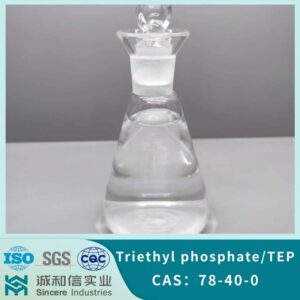
Structural Substitution Driven by Halogen Bans
As EU REACH regulations and global POPs restrictions intensify, traditional brominated and chlorinated flame retardants are being phased out. This is due to their bioaccumulation and potential toxicity. Consequently, TEP, as a halogen-free, low-toxicity phosphate ester, is stepping into a massive substitution void. In the field of Rigid Polyurethane Foam (RPUF), for instance, TEP provides excellent flame retardancy. Additionally, it significantly improves processing flowability due to its low viscosity. Ultimately, this dual attribute of functionality and environmental friendliness has led to its rising penetration in building insulation and cold-chain logistics.
Supply Chain Challenges Amid Raw Material Volatility
The production cost of TEP is deeply indexed to two primary raw materials. Firstly, Phosphorus Oxychloride is subject to periodic supply tightening from mining policies and environmental limits; as a result, its price fluctuations directly dictate TEP’s profit baseline. Secondly, Ethanol prices are volatile due to biofuel demand, thereby demanding higher proficiency in cost control from manufacturers.
New Growth Engines: New Energy and High-End Manufacturing
Beyond traditional applications, TEP is showing strong momentum in emerging sectors. In the realm of lithium battery safety, for example, TEP is widely used as a flame-retardant electrolyte additive to mitigate thermal runaway risk. Meanwhile, in high-end manufacturing, the advance of semiconductor technology is steadily growing demand for high-purity, electronic-grade TEP. Specifically, it serves as a precursor in Chemical Vapor Deposition. Furthermore, this niche market is less affected by bulk commodity fluctuations and offers higher margins.
Compliance Dividends in the Era of Sustainability
In the future, the ultimate frontier of competition will be the “carbon footprint.” With the implementation of policies like CBAM, TEP producers with low-carbon certification or bio-based inputs will gain stronger premium power. Therefore, in procurement, companies must assess more than just unit price. Instead, they should evaluate a supplier’s environmental credentials, such as ISO 14001 or ESG ratings. In summary, compliance is no longer a cost burden but the passport to entering international high-end supply chains.