
What Is Nonanoic Acid Used For? | CAS:112-05-0
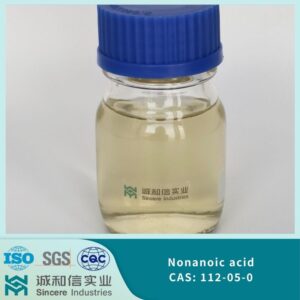
Nonanoic acid, also known as pelargonic acid, is a saturated fatty acid with the molecular formula C₉H₁₈O₂ and a molecular weight of 158.24 g/mol. This compound typically presents as a clear, colorless to pale yellow oily liquid at room temperature and is characterized by a distinctive, rancid-like odor. Slightly soluble in water but highly soluble in most organic solvents, nonanoic acid exhibits excellent stability, making it a compound of significant industrial interest.
Properties and Characteristics of Nonanoic Acid
One of the most prominent applications of nonanoic acid is in the agricultural sector. Where it serves as a natural-contact herbicide. Often referred to as pelargonic acid in this context, it operates by rapidly disrupting the cellular membranes of weeds upon contact. Leading to desiccation and plant death. Its appeal lies in its biodegradability and minimal environmental persistence compared to synthetic herbicides, aligning well with the growing demand for sustainable and eco-friendly crop protection solutions.
Agricultural Applications as a Herbicide
In the industrial domain, nonanoic acid proves its versatility as a valuable intermediate in the production of several specialized chemicals. It is used in the synthesis of lubricants and metalworking fluids, where its chemical structure enhances performance under demanding conditions. Additionally, it acts as a precursor for plasticizers, aiding in the flexibility and durability of various polymer products. Its role in these applications underscores its importance in supporting industrial processes and material science.
Industrial Uses and Chemical Intermediate
The flavor and fragrance industry also benefits substantially from nonanoic acid, particularly through its ester derivatives. When converted into esters such as ethyl nonanoate, it contributes fruity and wine-like aromas that are integral to perfumes, cosmetics, and food flavorings. These compounds are prized for their ability to impart fresh, natural notes in formulations, enhancing the sensory qualities of end products.
Role in Flavor, Fragrance, and Esters
Moreover, nonanoic acid finds functional use in pharmaceuticals and personal care as an antimicrobial agent. Its effectiveness against bacteria and fungi allows it to be incorporated into topical formulations, preservatives, and cosmetic products. Where it helps to improve shelf life and safety. As a additive, it supports product stability and offers mild conditioning properties.
Pharmaceutical and Personal Care Applications
In summary, nonanoic acid is much more than a simple fatty acid. From enabling greener agricultural practices to enhancing industrial formulations. Enriching fragrances, and supporting health and beauty products. This multifaceted molecule continues to demonstrate critical importance across a diverse range of industries.