
Diethyl Ethoxymethylenemalonate (EMME) | CAS 87-13-8
Introduction to EMME
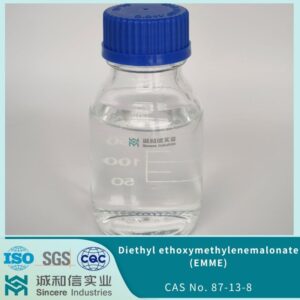
Diethyl ethoxymethylenemalonate (EMME) is a specialized organic compound with the molecular formula C₁₀H₁₆O₅ that serves as a crucial building block in modern chemical synthesis. With CAS number 87-13-8, this colorless liquid has become indispensable in pharmaceutical and agrochemical manufacturing due to its unique reactivity profile. As a leading producer of fine chemicals, we supply EMME in 99% purity grade to support critical industrial applications worldwide.
Key Properties and Specifications
Our premium-grade EMME exhibits consistent physical and chemical characteristics that make it ideal for sensitive synthetic processes. The compound has a molecular weight of 216.23 g/mol and a density of approximately 1.09 g/cm³ at room temperature. Unlike many chemical intermediates that require special handling due to solid-state properties, EMME remains in liquid form under normal storage conditions, facilitating easier processing in industrial settings. Each batch undergoes rigorous HPLC analysis to ensure the ≥99% purity standard is maintained, with comprehensive Certificates of Analysis available for quality assurance.
Primary Industrial Applications
In the pharmaceutical sector, EMME plays a pivotal role as a key intermediate in the synthesis of quinolone antibiotics, including clinically important drugs like ciprofloxacin and norfloxacin. The compound’s ethoxymethylene group serves as a reactive handle that enables efficient construction of these medically essential heterocyclic frameworks. Beyond antibiotics, EMME finds application in developing various other therapeutic agents where its unique molecular architecture facilitates complex bond formations.
The agrochemical industry similarly benefits from EMME’s synthetic versatility. Manufacturers utilize this intermediate in creating advanced crop protection agents, where it contributes to the molecular backbone of several effective pesticides and herbicides. Its reactivity profile allows for the development of compounds with improved efficacy and environmental profiles compared to traditional agrochemicals.
Synthesis and Manufacturing Process
The production of high-quality EMME involves a carefully controlled reaction between diethyl malonate and triethyl orthoformate under optimized catalytic conditions. Our manufacturing process emphasizes precision temperature control and strict moisture exclusion to maximize yield and purity. The final product undergoes multiple purification stages, including fractional distillation, to remove any residual reactants or byproducts. This meticulous approach ensures batch-to-batch consistency that meets the exacting standards of pharmaceutical applications.
Handling and Safety Considerations
While EMME offers significant synthetic utility, proper handling protocols must be observed. The compound should be stored in tightly sealed containers under inert atmosphere when long-term storage is required. Standard chemical safety equipment including nitrile gloves, chemical splash goggles, and proper ventilation should be employed when working with EMME.