1-Butyl-3-methylimidazolium tetrafluoroborate: The Ionic Liquid Driving Innovation Across Industries
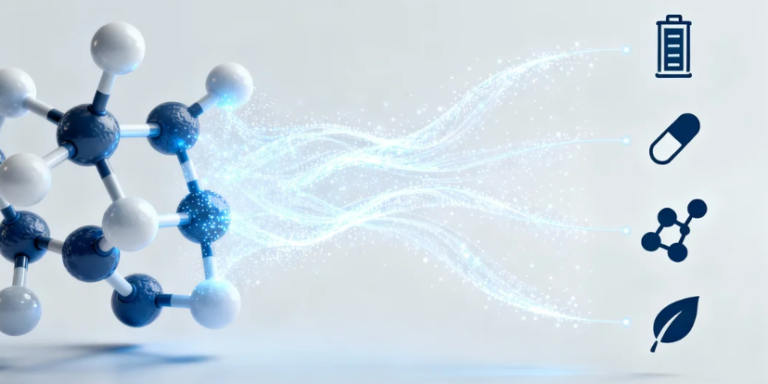
Among the many ionic liquids developed over the past two decades, 1-Butyl-3-methylimidazolium tetrafluoroborate ([BMIM][BF₄]) has become one of the most studied and widely applied. It’s not just a lab curiosity — it’s a versatile material that is now finding its place in energy storage, green chemistry, and advanced materials manufacturing.
Key Characteristics
What sets 1-Butyl-3-methylimidazolium tetrafluoroborate [BMIM][BF₄] apart is its unique balance of physical and chemical properties:
- High ionic conductivity — enables fast ion mobility in electrochemical systems.
- Thermal and chemical stability — allows operation under demanding conditions.
- Low vapor pressure and non-flammability — ensures safer handling compared to traditional solvents.
- Good solubility for organic and inorganic substances — makes it a flexible reaction medium for complex chemical systems.
Expanding Applications
1. Energy Storage and Electrochemistry
[BMIM][BF₄] has shown excellent performance as an electrolyte or co-solvent in lithium-ion batteries, supercapacitors, and fuel cells. Its high ionic conductivity and wide electrochemical window help improve charge efficiency, stability, and lifespan. Researchers are also exploring it for solid-state electrolytes and ionic gel materials, paving the way for safer, non-volatile battery technologies.
2. Green Solvent for Sustainable Chemistry
In organic synthesis and catalysis, [BMIM][BF₄] replaces traditional volatile organic solvents. It supports a variety of acid-base, oxidation, and coupling reactions, offering higher selectivity and easier product separation. Since it can be recycled and reused, it fits perfectly into the goals of green and sustainable chemistry.
3. Gas Capture and Separation
Thanks to its tunable polarity and ionic nature, [BMIM][BF₄] can selectively absorb gases like CO₂, SO₂, and H₂S. It’s being studied as a medium for carbon capture and utilization (CCU), where it helps reduce emissions in industrial processes. Some pilot studies have demonstrated up to three times higher CO₂ solubility compared with traditional solvents.
4. Material Science and Nanotechnology
[BMIM][BF₄] acts as both a solvent and stabilizer for nanoparticle synthesis — from metals and oxides to carbon-based nanomaterials. In polymer processing, it helps dissolve cellulose, chitosan, and other biopolymers, offering new pathways for biodegradable material development. It’s also used in lubricants, coatings, and electroplating, where ionic liquids can enhance performance and durability.
A Material that Connects Innovation and Sustainability
For many chemists, [BMIM][BF₄] represents more than a convenient solvent — it’s a symbol of how chemistry can evolve: reducing volatility, enabling cleaner reactions, and supporting the shift toward greener industrial processes. As the world looks for materials that can do more with less, [BMIM][BF₄] will likely remain at the forefront of ionic liquid research and application.